
Across many sectors, hygiene infrastructure decisions are not driven solely by innovation, but by reliability, maintenance predictability, and long-term cost efficiency. While the adoption of the smart bathroom continues to grow, a significant number of industries still rely on established systems, including traditional series restroom dispensers, to meet operational demands. These environments often prioritize stability over digital integration, especially where usage intensity is high or maintenance resources are limited.
Healthcare And Legacy Infrastructure Reliance
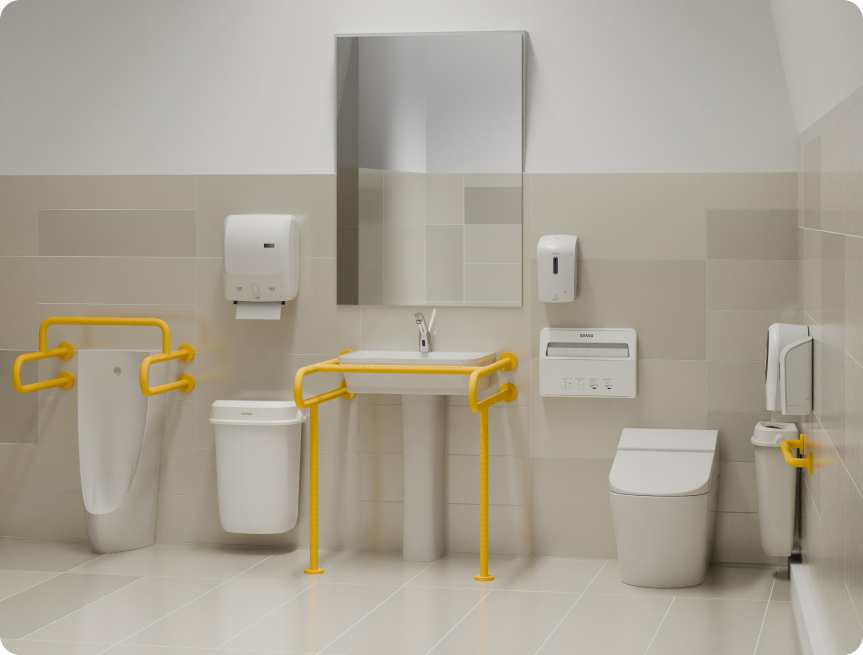
Healthcare facilities, particularly older hospitals and long-term care centers, often continue to depend on traditional series restroom dispensers due to their proven durability and ease of maintenance. While some newly built departments integrate smart bathroom solutions, legacy infrastructure makes full transitions challenging. In high-traffic environments, staff prioritize equipment that can be serviced quickly without digital dependencies. As a result, traditional series restroom dispensers remain a standard choice. Even as the smart bathroom concept expands in modern healthcare design, hybrid systems are more common than full replacements.
Manufacturing, Logistics, And Cost-Driven Facilities
Manufacturing plants and logistics hubs prioritize operational efficiency and cost predictability. In these environments, traditional series restroom dispensers are often favored because they require minimal technical support and offer consistent performance under heavy use. While the smart bathroom concept introduces automation and usage monitoring, many facilities delay adoption due to upfront investment concerns. Even where modernization occurs, it is typically partial, with smart bathroom features added only in selected zones. Traditional series restroom dispensers therefore continue to play a critical role in maintaining hygiene standards across large-scale industrial operations.
Public Infrastructure And Gradual Modernization
Public buildings such as transit stations, community centers, and municipal facilities face the challenge of serving diverse users while managing limited maintenance budgets. Traditional series restroom dispensers remain common due to simplicity and reliability in high-turnover environments. At the same time, the smart bathroom is gradually introduced in upgraded facilities where user experience and hygiene monitoring are prioritized. However, adoption is slowed by budget cycles and infrastructure constraints. Many public spaces therefore operate hybrid systems combining smart bathroom elements with traditional series restroom dispensers.
Why Conventional Systems Still Matter In Evolving Hygiene Strategies
Despite rapid innovation in hygiene technology, conventional systems remain essential in many operational contexts. The balance between reliability, cost, and accessibility ensures that traditional series restroom dispensers continue to coexist with the smart bathroom. At SVAVO, we specialize in the research, design, and manufacture of smart hygiene equipment. Our FAMILY TOILET solutions for third restrooms are designed for elderly individuals and those with mobility challenges, delivering safe and durable equipment for public spaces. We help industries transition toward smarter hygiene while respecting real-world constraints, supporting a future where practicality and innovation work together.