
Modern hospitals are increasingly expected to provide specialized, family-friendly environments that support mothers and newborns beyond clinical treatment. To achieve this, we focus on integrating a structured infant care infrastructure that combines hygiene, safety, and convenience. Central to this development are smart bathroom systems and dedicated diaper changing stations, which help hospitals improve sanitation standards while enhancing user experience. By planning these facilities strategically within maternity and pediatric departments, we ensure that caregivers and families can access clean, efficient, and well-designed support spaces at all times.
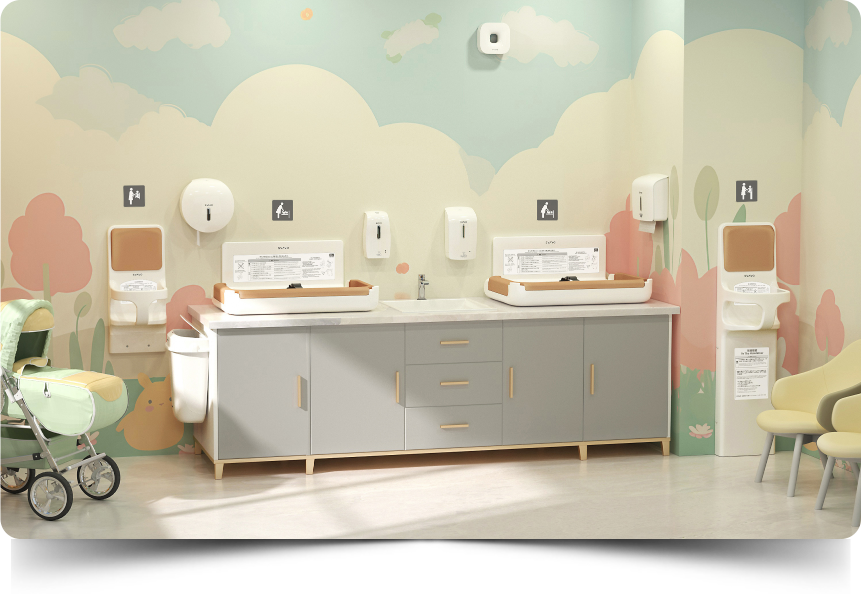
Designing Dedicated Nursing Rooms in Hospitals
We prioritize the development of nursing rooms as essential components of infant care infrastructure. These spaces are designed to offer privacy, comfort, and hygiene for mothers and infants. Within these areas, diaper changing stations are installed to provide safe and convenient handling of infant hygiene needs. At the same time, integrating a smart bathroom concept ensures touchless operation, reducing contamination risks in high-traffic medical environments. We also ensure that multiple diaper changing stations are positioned efficiently to reduce waiting time and improve patient flow. By combining comfort with technology, hospitals can create a more supportive care environment.
Integrating Smart Bathroom Systems for Infant Care Areas
We emphasize the importance of a fully connected smart bathroom system in infant care zones. These systems incorporate sensor-based faucets, automatic soap dispensers, and intelligent waste management solutions to maintain high hygiene standards. In maternity wards, a smart bathroom setup works alongside diaper changing stations to create a seamless care experience for families. When hospitals deploy a comprehensive smart bathroom design, they significantly reduce cross-contamination risks and improve operational efficiency. Additionally, positioning diaper changing stations near these areas ensures caregivers can quickly transition between hygiene tasks without leaving the designated care zone.
Installing Hygienic Diaper Changing Stations for Workflow Efficiency
Efficient hospital design also depends on the strategic installation of diaper changing stations across maternity wards, pediatric units, and public nursing rooms. We focus on ensuring that each diaper changing station is ergonomically designed, easy to sanitize, and accessible. When combined with a smart bathroom environment, these stations become part of a larger hygiene ecosystem that supports both staff and families. Proper distribution of diaper changing stations helps reduce congestion and ensures that infant care processes remain smooth and organized, even during peak hospital hours.
Building a Safer Infant Care Ecosystem
By integrating smart bathroom systems and strategically placed diaper changing stations, hospitals can significantly enhance the quality of infant care infrastructure. These elements work together to create safer, cleaner, and more efficient environments for both caregivers and medical staff. As SVAVO, we specialize in the research, design, and manufacture of smart hygiene equipment. Through our commitment to innovation, we support the development of advanced nursing room solutions and high-quality facilities for mother and baby spaces, helping our partners build more comfortable and reliable infant care environments.